



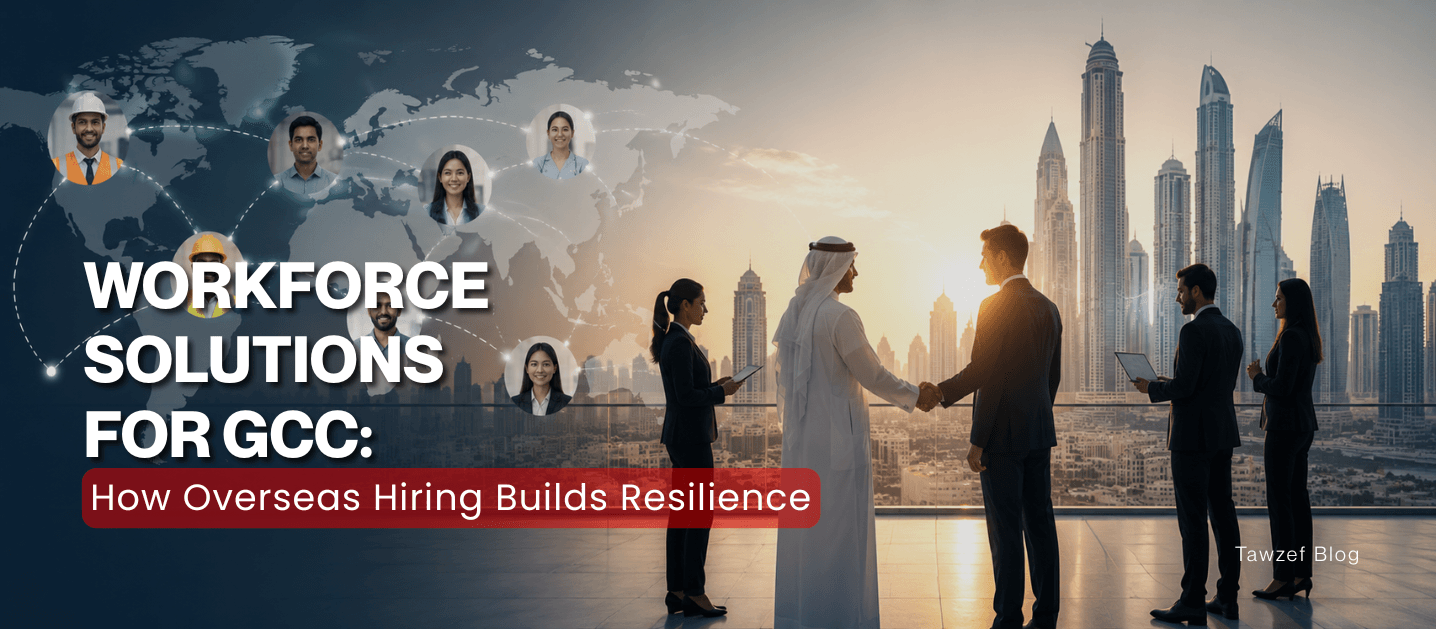


The GCC talent market continues to expand as businesses grow and compete for skilled professionals. Data has found that 66% of employers increased their workforce in 2025, highlighting the region's rising demand for talent and the need for more flexible workforce solutions.
As organizations confront skills gaps, evolving workforce needs, and rapid growth, hiring talent from overseas has become a crucial feature in GCC recruitment strategies.
In this article, we’ll discuss why overseas talent sourcing is becoming central to building a resilient workforce and how businesses can combine different workforce models to support sustainable growth.
What Are Workforce Solutions? Why Do GCC Businesses Need Them?
Workforce solutions are services and strategies that enable organizations to attract, hire, manage, develop, and retain the talent necessary to achieve their business goals.
While they can include a range of HR services, for many GCC businesses the priority is finding skilled talent quickly and efficiently.
As demand for qualified professionals continues to grow across the GCC, workforce solutions increasingly focus on overseas recruitment, enabling organizations to access larger talent pools in markets such as Egypt and fill critical roles faster.
This has become increasingly important as government investments, mega-projects, and economic diversification accelerate hiring demand across the region.
At the same time, businesses must manage nationalization initiatives such as Saudization and Emiratization while maintaining the workforce needed to support growth.
By combining local workforce requirements with overseas recruitment, workforce solutions help GCC organizations overcome talent shortages, reduce hiring delays, and build a skilled workforce that supports long-term business success.
Why Does Workforce Resilience Require More Than One Hiring Channel?
A resilient workforce is one that can adapt to changing business demands, scale quickly, and maintain productivity, even amidst talent shortages or market disruptions.
Rather than just filling vacancies, workforce resilience focuses on ensuring organizations have the necessary talent to respond to change and support long-term growth.
Achieving this resilience requires hiring across multiple channels. However, this means having a balanced workforce strategy that combines local upskilling and reskilling initiatives with access to overseas talent when specialized skills are not readily available.
By 2030, 2.6 million jobs in the Middle East and North Africa (MENA) region are expected to require project management-oriented skills. That’s a 40% increase in demand.
As the region’s project pipeline expands, organizations that integrate local talent development with strategic overseas hiring will be better positioned to build a resilient, future-ready workforce.
How Does Overseas Hiring Strengthen Workforce Resilience?
Overseas hiring lets businesses tap into specialized talent beyond their local labor market, helping them fill critical skill gaps that may be challenging or time-consuming to address domestically.
It also provides companies with greater speed and flexibility, helping them respond faster to changing project demands. This enables them to scale their teams efficiently without sacrificing the quality of talent.
Overseas recruitment enhances workforce resilience by diversifying talent sources. A balanced approach incorporates local talent development, reducing reliance on a single labor market.
This helps organizations better manage talent shortages, navigate economic uncertainty, and adapt to shifting workforce demands, ultimately promoting long-term operational stability.
What Should Companies Plan for Before Hiring from Overseas?
Despite its benefits, hiring overseas talent requires careful planning to ensure success.
Beyond finding the right candidates, businesses must prepare for various operational, legal, and cultural factors that contribute to a smooth hiring process and long-term employee success and retention.
Here’s what companies need to plan before hiring overseas talent:
1) Visa and Work Permit Timelines
Overseas recruitment isn’t an immediate solution. It takes time. Processing times for visas and securing work permits can vary significantly based on the candidate's nationality and the destination country.
Therefore, companies should consider these timelines when developing their workforce planning strategy.
2) Onboarding Across Distance
Bringing on remote employees requires a more comprehensive onboarding process compared to local hires.
To help new team members integrate swiftly and begin contributing effectively, you need to provide clear documentation, assign a dedicated point of contact, and implement a structured 30-day onboarding plan.
3) Integration with Local Teams
The success of overseas hiring goes beyond the recruitment phase.
Organizations must ensure new employees know what to communicate and when, understand workplace culture and reporting structures, and become familiar with team dynamics.
Investing in thoughtful integration strategies can significantly enhance collaboration and engagement, increase productivity, and boost employee retention.
4) Local Nationalization Requirements
In many GCC countries, workforce nationalization policies influence hiring practices, with regulations varying by country, industry, and organization.
Companies should familiarize themselves with these requirements before pursuing overseas recruitment.
Collaborating with an experienced overseas recruitment agency, like Tawzef, can ensure compliance with local regulations when securing Egyptian talent.
How Can Businesses Get Started with Overseas Hiring?
A successful overseas hiring strategy begins with careful planning. By adopting a structured approach, your business can address skills gaps and effectively ensure compliance and long-term workforce stability.
Assess your workforce needs: Identify current skills gaps, future hiring demands, and roles that are difficult to fill within the local talent market.
Determine which roles are best suited for overseas hiring: Focus on positions where specialized expertise is scarce locally or where overseas talent can significantly accelerate business growth or cut costs.
Choose the right overseas recruitment partner: Collaborate with an Egypt-based recruitment company, like Tawzef, with a strong record in the GCC. We understand local compliance requirements, hiring regulations, and recruitment processes, helping you streamline your hiring process while reducing administrative complexities and risks.
FAQs about Workforce Solutions in the GCC
Is Overseas Hiring more Complex than Local Hiring?
Yes, overseas hiring involves extra steps like candidate documentation, visa processing, work permits, and compliance with local labor laws. Partnering with an experienced recruitment agency can help manage these administrative and legal tasks efficiently.
How Long Does Overseas Hiring Take in the GCC?
There's no standard timeline. It depends on the destination country, role, candidate availability, and visa processing times. Working with an overseas recruitment agency can help streamline sourcing and documentation to reduce hiring time.
Does Overseas Hiring Replace Local Hiring?
No, overseas hiring is intended to complement or support, not replace, local recruitment and workforce development initiatives. By combining overseas hiring with local upskilling and reskilling efforts, businesses can create a more resilient workforce that adapts to changing needs.
What Industries Rely Most on Overseas Hiring in the GCC?
Overseas hiring is common in industries that require large, specialized, or project-based workforces. Sectors such as construction, retail, hospitality, healthcare, logistics, and major infrastructure projects frequently recruit overseas talent to address skills shortages and support business growth.
Wrapping It Up
Workforce resilience in the GCC isn’t about choosing between local talent and overseas candidates. It’s about integrating both strategies to drive business growth.
Developing local talent ensures compliance and strengthens your presence in your local market and the region, while overseas hiring helps fill gaps in the local market, providing the speed and specialized skills necessary for continued growth.
As the demand for skilled talent continues to rise across the GCC, businesses that achieve this balance will not only survive disruptions but will also excel in overcoming them.
Ready to create a workforce that can handle any challenges ahead? Contact Tawzef for tailored workforce solutions and your overseas recruitment needs.